Asthma, The Placebo Effect, and Miracles

If you want to make friends — somebody once said — never talk about politics or religion. Why? Because if you do, you’ll find that you passionately disagree with your acquaintances. Whoever “somebody” was, they probably made great small talk at cocktail parties. 

See this cute little kid? No, that’s not me, and no he’s not smoking hookah. He’s the star of an iStock photoshoot, somehow making nebulizers look fun. 

When I was his age, I was diagnosed with asthma. When I got sick, I’d awake barely able to draw in a breath until my mom started my nebulizer. I looked nothing like this guy. To be fair though, drool and mucus aren’t trending keywords in the stock photo business. 

The years brought some reprieve, but even into adulthood, the common cold would settle deep into my lungs. What I’d notice most regularly, though, is that before any sort of cardio, my inhaler was a must. Two puffs before a casual game of basketball, and I’d still suck wind for twenty minutes till it kicked in and brought my lungs’ protest to a manageable level. 

I developed a sense for how hard I could run with and without my inhaler. I’m loath to reference actual times — they’re on a treadmill, unimpressive to the running world, and yet it still feels egotistic to proclaim them — but they’re part of the story, so bear with me. About five years ago, when I was running somewhat regularly, I pushed my treadmill mile PR (personal record) down to a painful 6 minutes with an inhaler. Since then, my times gradually slowed 10-20 seconds. Without an inhaler: a 9-10 minute mile would be comfortable, below an 8 minute pace I would start to taste blood and wheeze, and 7:30 was probably the best I could do, though at the expense of being wracked once I stumbled over the finish. 

Here’s where cocktail party guy bids me stop. A half-finished story is preferable to a divisive one. But I’m not cocktail party guy. I don’t want to live in a bubble of yes-men, and I don’t think you do either. After all, you clicked on a link that could have been trying to either scorn the divine or proselytize you into a cult. But as much as we want to open-mindedly confront the ideas of our peers who look at the world differently, it goes against our nature. As I walk between spheres of Christians, atheists, liberals and conservatives, I confess that more often than I’d like, I change my tune because of an unhealthy desire to blend in, be liked, and be accepted. Chameleoning, I call it. I’m working on that.

I dream of a world where colliding bubbles don’t fracture, they fuse. Conservatives and liberals uncover shared sentiments driving their polar politics and begin to integrate ideas from across the aisle. People of faiths and people of no faith jointly seek scientific truth, unabashed of the variegated interpretations they espouse. Proponents of rapid societal reopening and proponents of extended isolation come to understand each other’s motivations, and compromise instead of criticize. 

Will you risk a collision with me? I have a story that I want to share with you, and whether I recount a miracle shining through the placebo effect or being explained by it, will you join me? This isn’t a post about why God does or doesn’t exist, but about how people who believe He does can deeply engage with people who believe he doesn’t. I find that the best conversations about the divine happen when theists and atheists speak openly about how they grapple with and question their own worldviews. But if you don’t want to, that’s okay. We can stick to the easy topics. Click the little x. Nobody gets mad at cocktail party guy. 


About a year ago, a preacher at church was calling up people with various ailments to pray for their healing. I was plenty healthy at the time, though I couldn’t help but think about my chronic asthma. As much as I wanted to get rid of it, so far, I was 0 for many on that. On the other hand, I thought, worst case scenario, preacher-guy says some nice words then I awkwardly tell him nothing happened. So I mentally verbalized it: Hey God, will you call me up for my asthma? 

I open my eyes and the next words out of the preacher’s mouth are: “Is there anyone with something going on in the deep lungs?” Coincidence, I wonder, but the odds of pure coincidence have got to be pretty low. Humans do have an uncanny knack for subconsciously predicting each other, though, plus if you roll the dice long enough, you’ll eventually get what you’re looking for. But coincidence or not, what more could I have asked for? I look around and nobody else is stirring, so I make my way to the stage. 

Justin, the preacher, asks me what I came up for, then prays for my asthma — nothing long, no exorcisms, just a simple command that my asthma leave. Then he asks how I feel. Great, I tell him, but I don’t feel my asthma on a day-to-day basis, so the real question is how my lungs do when I run. He says well, run, and let me know how it goes. 

To be honest, when it comes to miracles of healing, I can be a bit of a skeptic. I’m keenly aware of the placebo effect, especially for more subjective matters like pain. Placebo response rates can be 30-40% [1]. In some cases, fake acupuncture may be more effective than western medicine [2]. I can’t rule out that my biases influence my perception; could they make me believe I’m healed even though nothing is different? But even if they did, does it matter? This made asthma an interesting case. I was about to measure my performance numerically, and numbers leave less room for distortion through the lens of perception.

I decide to do my familiar Monday run with no inhaler. I don’t think twice about it until I’m lacing up my shoes. As much as I have nothing to lose for trying, I realize that I am afraid to quench my candle of faith that this time will be different. I pause, but I’ve made up my mind, so I step onto the treadmill without my inhaler. I set the pace to around 6 minutes per mile, easily a minute faster than what I could do without an inhaler. 

One minute, then two minutes go by. I feel good and haven’t had to slow my pace yet — but, I think to myself, I’m only just beginning aerobic respiration. Minute three and minute four tick by and I haven’t slowed a bit. At this point, I realize this is probably farther than I could have gotten before. Might I actually finish a mile at this pace? At minute five it sinks in that I’m going to make it. I actually turn up the speed for a 6:05 finish — just 5 seconds shy of my inhaler-PR from five years ago. 

And yeah, I’m winded. I don’t really know how normal people feel when they run. But I’m staring at these red LEDs announcing my time and I’m not tasting blood or wheezing. 

If you’re a Christian, maybe you’re smiling. Placebo effect or not, I was thanking God. How often do you hear about someone being cured of asthma? If you’re not religious, maybe you have your skeptical face on. That’s fair. I did too. Could I really declare my asthma cured after one good run? 

So I came back and broke my mile PR by seven seconds. I ran in the cold. I ran my third fastest 5K. I beat my seasoned mountain biker friend up the hill. Since the day Justin prayed for me, I haven’t used my inhaler. I threw away nearly a thousand dollars’ worth of asthma meds that I’d been taking for 20 years. [3]

Seriously though, be wise and listen to your doctor. I didn’t do anything that would have been dangerous had my asthma remained unchanged. 

I believe in God. And if I believe in a God who created the world and its order, is it too much to believe that He intervenes from time to time?

You might not agree. That’s okay. You might raise any of the valid points about spontaneous remission, nonspecific support, or the Hawthorne and Rosenthal Effects that scientists studying prayer healing bring up [4], and I’d love to talk about them. I enjoy discussing these things because no matter what actually happened, and whether or not we can agree on how, my lungs used to hurt and now they don’t, and based on that we can celebrate a story about health to offset that last post about injury. 

I don’t write this to change your views on God. I write this in hopes that we will stop fearing contentious topics. That unexamined theists will step back and reexamine their beliefs through the critical lens that atheists do, and that those atheists will take the time to earnestly consider theistic experiences. If you want to talk to me about religion and politics, my door is open. I’ve bid cocktail party guy adieu. 


[1] “Mean placebo response rates in antidepressant clinical trials are 30% to 40%”. https://www.ncbi.nlm.nih.gov/pmc/articles/PMC3181672/

[2] “Available studies suggest that acupuncture is at least as effective as, or possibly more effective than, prophylactic drug treatment, and has fewer adverse effects”, and that when compared to “sham acupuncture”, “pooled analyses did not show a statistically significant superiority for true acupuncture,” suggesting that “sham” (fake) acupuncture may be more effective than prophylactic drug treatment (typical western medicine). http://www.scielo.br/scielo.php?pid=S1516-31802015000600540&script=sci_arttext

[3] Notes: My new mile PR is 5:53 (no inhaler). Running in the cold is notoriously painful on the lungs for asthmatics — I know from experience. This cold run and subsequent cold runs, though, haven’t hurt my lungs. I have 14 5K’s logged on Runkeeper, and the two runs faster than my new inhaler-less time are from 2016 when I was in better running shape. I’ve actually experienced a novel sensation of my legs being unable to keep up with my lungs. After getting off Xopenex, Advair, Nasacort, and Singulair for a month or so, I threw my whole stash away. 

[4] “Prayer and healing: A medical and scientific perspective on randomized controlled trials”. A great summary of various faith healing studies and their inherent difficulties, replete with snarky yet pertinent questions.  https://www.ncbi.nlm.nih.gov/pmc/articles/PMC2802370/#CIT11
If the pot’s cracked, you might as well shatter it

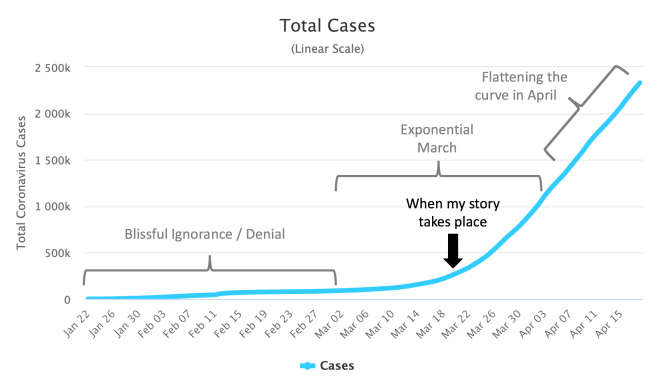
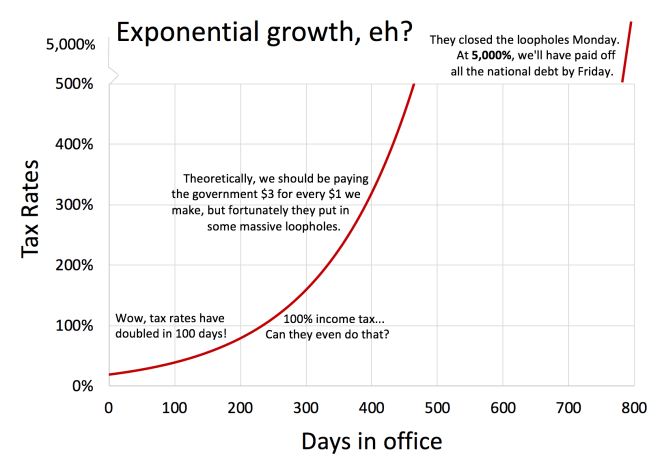
Take it from a guy who gets paid to (among other things) nitpick technical statements: People wildly abuse the term “exponentially.” No, your Camaro is not exponentially faster than his Camry, and nor does Bernie Sanders want to raise taxes exponentially. Exponential growth is when the independent variable is in the exponent – for instance, when something doubles every week. 

On March 6th, 2020, there were about 100,000 confirmed COVID-19 cases worldwide. A week and a half later, there were 200,000. A week later, 400,000. A week later, 800,000 (data from worldometer). In March, COVID-19 infections grew exponentially. 

The thing about exponentials is that they sneak up on you. The world can look completely different in a week. The Dow can drop 3,000 points in a day. What was okay one day can become unthinkable the next. 

If you’re smart, you get ahead of the curve. You start reacting to the future before it becomes the present. I should have done that. Instead, on March 21, I went for a nice, leisurely bike ride. Which was fine and dandy until I stared down the longest, steepest rock slab I’d ever contemplated riding. A week before, I wouldn’t have worried about it. A week later, I wouldn’t even have considered it. But I stood there, in the middle of an exponential, with my buddy telling me I should probably pass and take the ride-around, and I peered over the lip. Screw it. Worst case scenario, I’ll scrape some knees and elbows. 

I’m relatively new to mountain biking, but what I lack in skill, I make up for in audacity. Pulse high, I clipped in, breathed in, and dropped in. Slow and steady, they said, so slow and steady I went. I even came to a momentary standstill as I passed the point of no return at the halfway mark. The rock grew steeper and I picked up speed, still maintaining control but not far from losing it. More front brake, I told myself, but the visceral fear of tumbling over the bars seized me and I was shy on the brake lever. Careful about the pit at the bottom. I was moving faster than I would have liked, but finally the end came into view. I relaxed. And then…

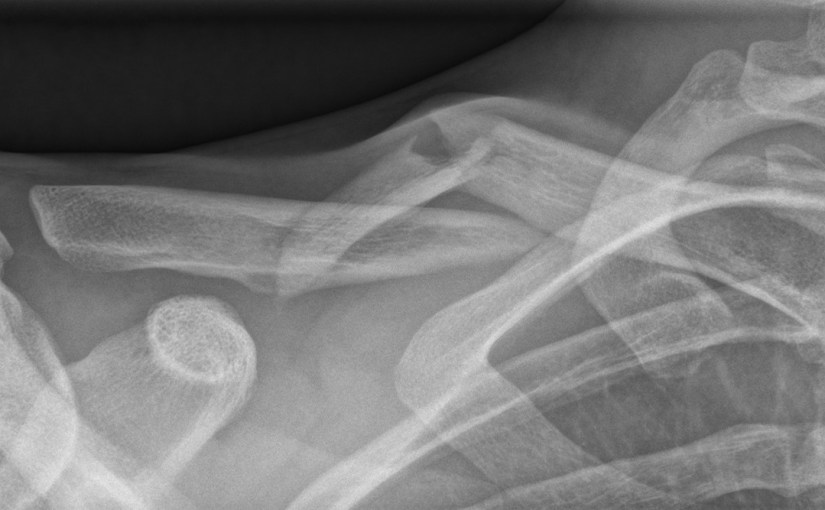
Oof. Apparently, I bottomed out my suspension in the pit I was supposed to be watching out for. My body position was too high above the bike and my arms were locked when they should have been bent. When I hit it, my left hand came off the handlebars and I flew over them, clipped out, and went for a roll but only made it to my collarbone, which didn’t make it out in one piece. 

As it turned out, I was in relatively empty hospitals for all that happened next. Everyone I interacted with was gracious and helpful, but the slew of safety precautions told me that even so, the last thing they needed was someone with a preventable injury risking transmission and taking up another bed. This time, fortunately, my being behind the curve didn’t cause any real harm, but I’ll appreciate it as a lesson in better considering the broader world in my personal risk tolerance. 

Over the next few hours, I found out that (especially at this time) they’d only operate on a broken collarbone if it was “pretty bad,” whatever that meant. If it was only a little bad, you’d recover back to normal without surgery. If it was pretty bad, you’d get surgery and eventually recover back to normal. But if it was medium bad, then you wouldn’t get surgery, and your shoulder might never be the same. 

I was reminded of my favorite Chinese idiom: 破罐破摔 (po4 guan4 po4 shuai1): If the pot’s cracked, you might as well shatter it. Well, that’s my translation. The literal translation is “to smash a cracked pot”, which better conveys its connotations of judgement. I first heard it from my Chinese roommate Max as he described his wallet: He’d already spent more than he should have today, so he was about to spend more, even though that was a po4 guan4 po4 shuai1 sort of thing to do. I’ve come to use this phrase liberally. If you crack your phone screen, why not throw caution to the wind and go caseless? Po4 guan4 po4 shuai1. My housemate: Dude, she broke your heart, why are you still hanging out with her? Me: Po4 guan4 po4 shuai1. 

The last bone I broke was a little one and at the time, I denied that it was A) broken or B) my fault. It was my friend’s pinky finger (sorry, Hannah). But if I was going to break one of my own bones, then by Jove, I was going to shatter it. 

By shatter it, I mean broken into six pieces shattered. (I can only pick out three or four pieces from the x-ray, but after the operation my surgeon told me I’d broken it into six pieces which sounds a lot more intense, so I’m sticking with that). 
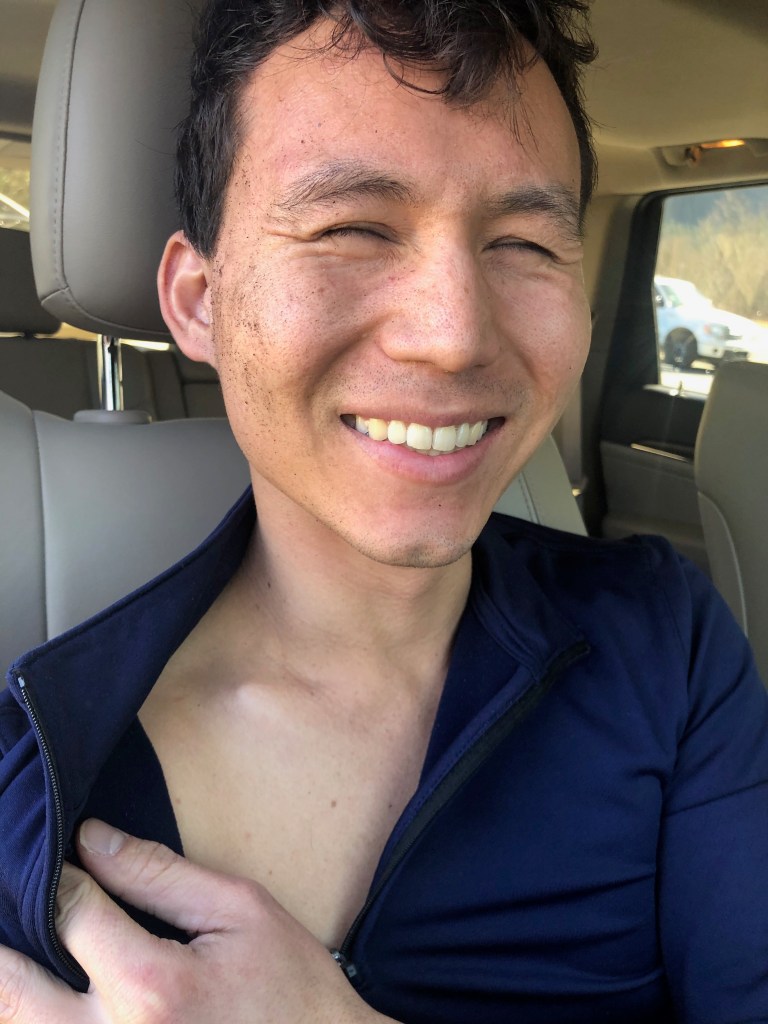
As glad as I am not to have my collarbone poking out of my chest, I’m a bit disappointed at how the plate they put in affects the symmetry of my clavicle contours. 
My surgeon offered me a piece of advice: If I ever got an MRI, I was in for a VERY bad day, which made sense.* Then I offered him some advice too: It looks like you put the middle screw in upside down. He didn’t think it was very funny. 

In case you were wondering, my lively discussion as to what could have been written above the incision was inconclusive.

*On reading this, my friend Alex noted that these days, they put in MRI-safe titanium plates. I confess to taking some poetic license with my doctor’s words – The imagery of a bad day at the MRI was just too tempting not to allude to. I believe his actual words were that if I ever wanted to get an MRI, I needed to tell them that I had this plate in. When I asked him if that meant that I couldn’t get an MRI, his noncommittal answers weren’t exactly confidence-inspiring.

Am I a loud, obnoxious American.

A friend once noted that people from the United States have this habit of answering the question “Where are you from?” with “I’m American.” While perhaps there’s some beauty to this nationalistic pride, my friend couldn’t help but respond, Really? I’m American too, and I’m from Costa Rica. In case you weren’t aware, there are two entire continents called the Americas.

I tried to explain this to my Canadian friends when they called me an American, noting that technically, they are Americans too. It didn’t go over too well.

These days, I usually say that I’m from the States, but is that unfair to the Federated States of Micronesia? And any Canadian from “The Provinces” would sound awfully pretentious.

Culturally speaking, I didn’t find it hard to move to The Provinces. I wouldn’t even say it ever felt that different. There’s a lovely air to the population that I suppose has earned them the descriptor “Canada nice”. They even do this funny thing in the grocery stores where, if they notice you pushing your cart towards where they’re already headed, they’ll pretend to notice something interesting and stop so you can continue without having to feel bad about cutting ahead of them. Or maybe, they know that if they wave you ahead, you’ll shake your head and wave them ahead, and the whole kerfuffle simply isn’t worth the hassle. Or maybe I have an overzealous imagination.

Yes, the country leans more left than the US (refer to Figure 1), and cares about the environment and animals (refer to Figure 2), but I certainly don’t feel out of place!* Folks are friendly and don’t even sound that different – I feel like I fit right in. Still, the inner skeptic wonders if in reality, I’m still just a loud, obnoxious American and they’re simply too nice to tell me.

Lil' restaurant humor
Figure 1: Left, right, or center, can you help but chuckle?
Figure 2: The abolition of blissful ignorance for those who don’t splurge for Cage-Free Eggs.

So here I am, doing my best to assimilate into Canadian culture. In China, I played the how-long-can-I-go-before-people-realize-I’m-not-Chinese Game. Here I play the are-people-surprised-when-they-hear-I’m-not-actually-Canadian game. I’ve gotten pretty good at apologizing when other people bump into me, throwing in a well-placed “eh” here and there (though I confess to horrifically misusing “eh” when I first arrived), and sorey-ing my sahrrys, but I’ll still forget that it’s a washroom, not a bathroom. Fortunately, at the end of the day it doesn’t matter if I sound like a Canadian or someone from the United States of America (so wordy!). I’m here for a reason, I’m making the most of it, and to top it off, when I travel somewhere and everyone’s complaining about those loud, obnoxious Americans, I can say I’m visiting from Canada.

* Not meant to get into politics or imply a political stance. That’s for another day.

11:11

Do you make a wish at 11:11? I do.

I have a friend who will subtly step in front of the clock when 11:10 rolls around, hoping I won’t notice the time. When, a minute later, I crane my neck around his body he’ll glare at me. “What are you, superstitious?” No. I’m rational and I’m practical.

I love asking friends what they’d do if all of the traditional obstacles were taken out of the way. If they were unshackled from the limitations of money, time, or lack of connections. It says so much about them. It shows me how I could support them. It gives them a moment to consider the course of life they’re currently on.

11:11 is the same for me. It’s a minute that, despite being identical to the other 1439 minutes in a typical day, every now and again reminds me to dream. To dream about inventions or adventures or friendships so I don’t lose sight of what I really desire.

You know the rule: You can’t tell anyone your wish, or it won’t come true. Fair. But the reality is, you can’t tell anyone your wish so that you’re not afraid to wish for things so extravagant you’re afraid to tell anyone about. I don’t just have to consider serious business ideas, but I can also wish about that girl who’s way out of my league, or wild success of a pet project. I’ll dream now and wait till I’m ready to publicize these things.

So here’s to wishing. Another friend would take her phone out of 24 hour time for one minute every evening so she could see 11:11. Maybe that’s a bit extreme, but one way or another, I’m for a world where people dream.

Kaleidoscope

“Give me highs, give me lows,”

When I came to China, my apartment was on the 33rd floor and the view was stunning.

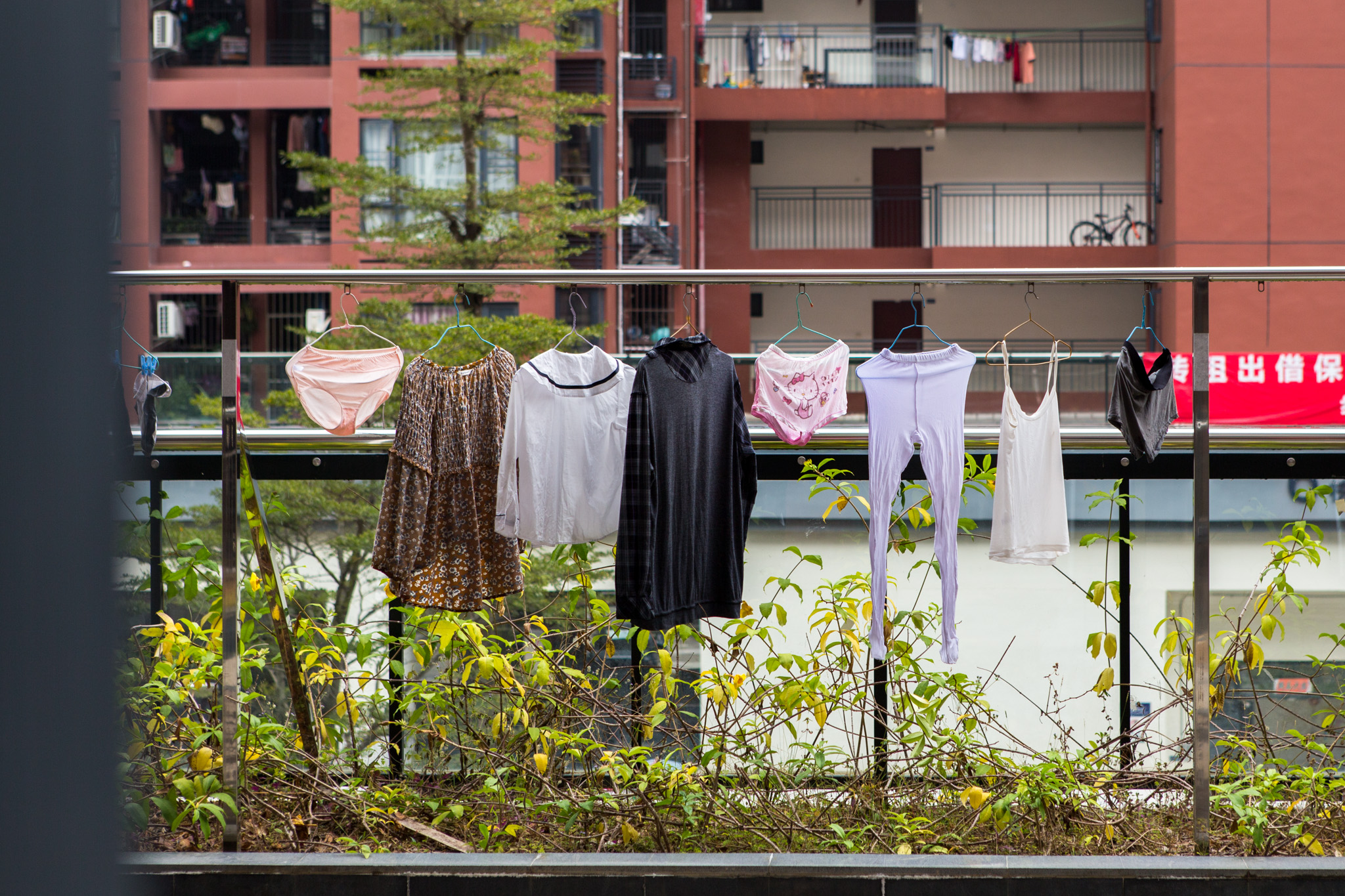
Now, I’m on the bottom floor and my view is… stunning. I guess it’s trendy to emblazon Hello Kitty on your undergarments here.

IMG_5554
The view of my community through my bedroom window.

In part, variation is natural. Seasons; cycles; our circadian routine. The light would be blinding were there no night. I love exploring new places, but sometimes I need to take a break. Touring China all winter vacation was a ball, but I had to follow it with days in bed binge reading and rearranging my home screen icons.

On other days, though, the lows are simply lows. Like having to move out of a great apartment to a world of grandmothers hanging laundry so close to my window I could literally touch it from my bed.

There are days when I feel great about my Chinese. Days when the isolated bits of the language solidify into structures. I grow giddy with excitement when I understand banter and can even catch the odd joke. But then someone asks me the simplest question and I second-guess what they’d just said. As I flounder for words, I lunge at these newly formed structures only to find their delicate features not solid, but ash that disintegrates as I grasp for it.

There are days when my writing feels natural and days when I read it and think gosh, I’m pretentious.

And days when I publish it anyway.

I decided this semester to pick the most interesting classes regardless of their difficulty or inconvenience. It was going to be a great semester. Then classes start and the way I’m understanding them, they may as well be in Chinese.

I meet amazing friends here and then I’m afraid to talk to them. Group messages are terrifying. I hole up in my room even though it’s the last thing I want to do.

“Give me thorns with my rose – I want everything.”

The Chinese have an aphorism for every situation. There’s even a saying that they’re reminded of whenever I mispronounce my metro stop.*

There’s one that comes to my mind when the lows sink in. It’s actually a poem, and I don’t think any of its English translations quite do it justice.

横看成岭侧成峰,
远近高低各不同,
不识庐山真面目,
只缘身在此山中。
蘇軾

From side: cliff walls; yet a peak from base.
Far, near, high, low: never the same place.
Since I stand here within its midst
How can I know Mount Lu’s true face?
– Su Shi, Translated by Su Tong (some punctuation mine)

DSC_6127
Sichuan, China (I never made it to the Lu range, unfortunately). Photo taken by Max Li.

Su Shi writes of his experience in the Lu mountain range. The most common allusion to the poem is the phrase “knowing Mount Lu’s true face,” used to describe a profound understanding of something. But there’s another piece of the poem: the idea that an insurmountable cliff and an attainable peak can both describe for the same mountain viewed from different perspectives.

Over winter break, I met my housemate Max’s parents (who were the sweetest! They treated me as their own and showed me all around Sichuan). They didn’t speak English, so it was a golden opportunity for me to practice my Chinese. I struck up conversation with his mother. And it was hard. Without even broken English to fall back on, I faltered and fumbled. At one point, someone laughed and told her not to bother – I didn’t have a chance. Which was true. I had to make her repeat everything, try different words, and re-explain. But she said no. She said no; this boy is hungry for Chinese: True, he doesn’t understand everything, but he does understand some things, and if I work with that, he’ll understand more things. I tucked away that sweet memory of someone choosing to see my Chinese from whatever angle it took to believe in me.

IMG_1232
The view of my community from the rooftop: How it was meant to be viewed.

So I try to make the most of the lows. This laundry-strewn public housing project? A tour of Chinese fashion I’d probably never have gotten elsewhere. My writing? A journey – I’ll never be any good if I’m afraid to start. And I made it through these courses and texted those friends and had awkward moments and laughed about them. These mountains are beautiful, but it sometimes takes a believer to help me remember what they looked like before I plunged into them, to recall the last summit I stood on, or to imagine the rush I’ll feel when I reach the peak instead of cowering with fear at the cliffs ahead.

IMG_7670
Breathing in the gusts from Dragon’s Back Ridge in Hong Kong.

“Fire, rain – the whole kaleidoscope.”

*The area I lived in is called Tang2Lang3, but tones are not my forte, so sometimes I pronounce it more like Tang2Lang2 (see English // Chinese for an explanation what the numbers mean). Which is be beginning of the saying 螳螂捕蝉黄雀在后: The mantis stalks the cicada, unaware of the finch just behind. The English equivalent: “There’s always a bigger fish,” or perhaps “Don’t lose the forest for the trees.” I think the latter translation better captures the intended meaning, but I’m too attached to the imagery accompanying Qui-Gon Jinn’s use of the former.

Travel Blogging Sort Of

Layovers are awfully inefficient. They take you out of your way and waste your time sitting on the tarmac and sleeping on chairs and floors of varying degrees of comfort. And often, the only reason you take them is because it’s cheaper to burn more gas: The inscrutable airline pricing algorithms at their finest. (Though to be honest, I can’t blame them. It’s a smart business move.)

After finishing exams in China, I planned to go to a wedding in Germany then head back to the States: Layovers, galore. I decided to play a game called travel across the world without any layovers. If a less expensive route required a layover somewhere, why not make a trip out of it?

And that’s how I’ve convinced myself that 40 days of traveling was actually the financially responsible thing to do.

Fun fact: Apparently the word “layover” isn’t typically taught in Chinese English classes – I had to explain it to a good number of Chinese friends with otherwise extensive English vocabularies.


So it’s goodbye, China. I feel like the descriptor “best decision of my life” is better saved for romantic and spiritual pursuits, so let’s just say it was a pretty good one. Besides being a ball, living in a very foreign country taught me how figure-out-able foreign places are. Yes, when I left on that plane out of Florida I had no clue where I’d be staying in China or whether I could get around with my limited Chinese or if I would get arrested on the spot for using a VPN. But everything worked out, and things that were challenges at first had solutions. I feel like I’ve jumped off the highest platform of the high dive. All the others? No problem. That’s not to say that I’m a total travel expert or anything, or that I won’t get us hopelessly lost if we travel together one day. Actually, I will confidently take quite a few wrong turns, as my Europe travel buddy Andrea will tell you. I’ve just become unafraid to “go”, perhaps even when I should be. And to anyone reading this: If you have the chance to “go”, do take it.

But there’s the rub – it’s hard to leave! There are so many people I’ll miss. I’ll see a lot of you again, I’m sure, but it’s not the same as when we’d see each other regularly.

IMG_2070
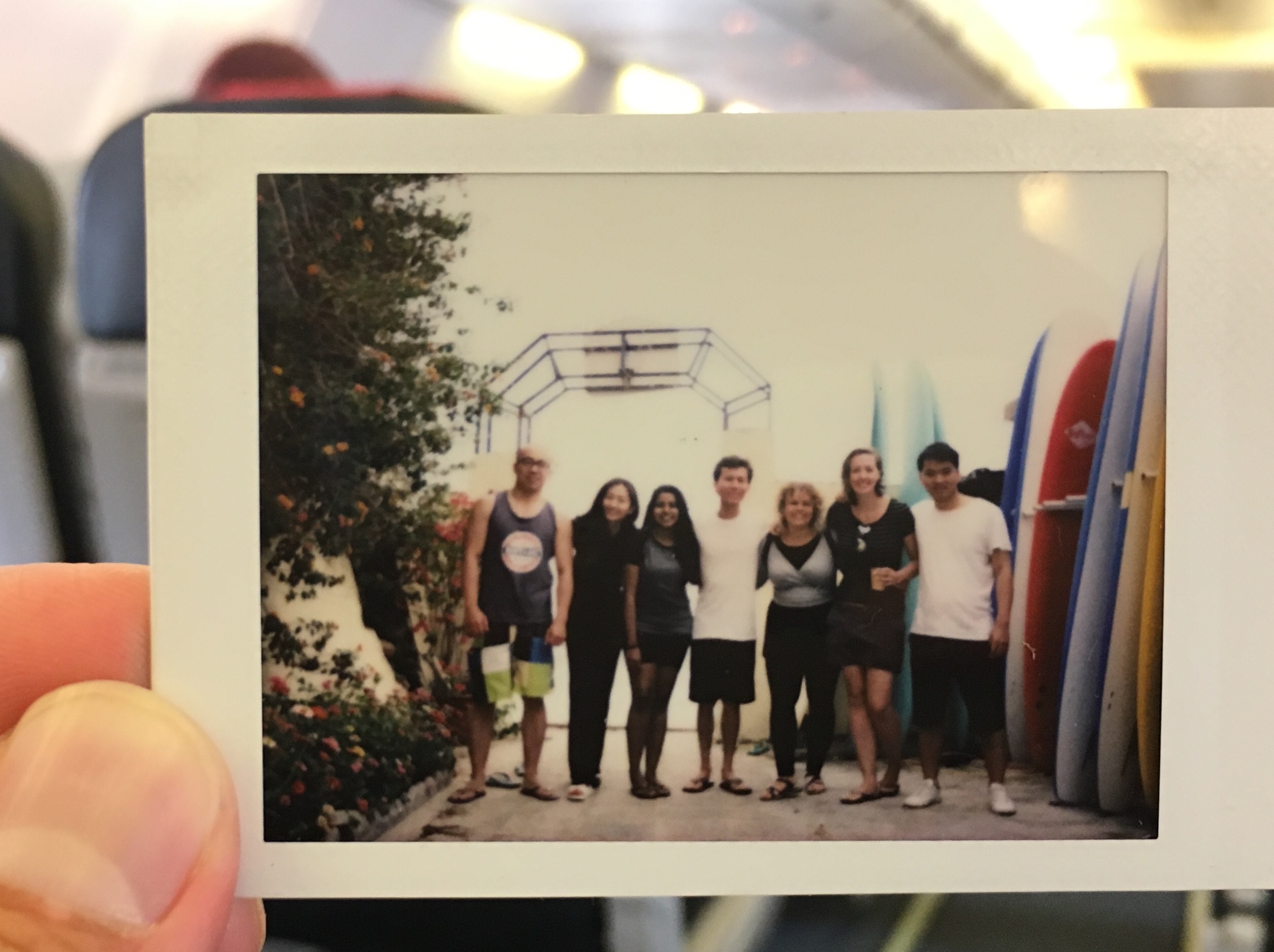
A final beach trip with some Grade A friends from Shenzhen

Fortunately, I had great folks to keep me company and exciting places to keep me busy taking it all in, so fortunately it hasn’t been TOO hard to leave. A few highlights:

IMG_2133

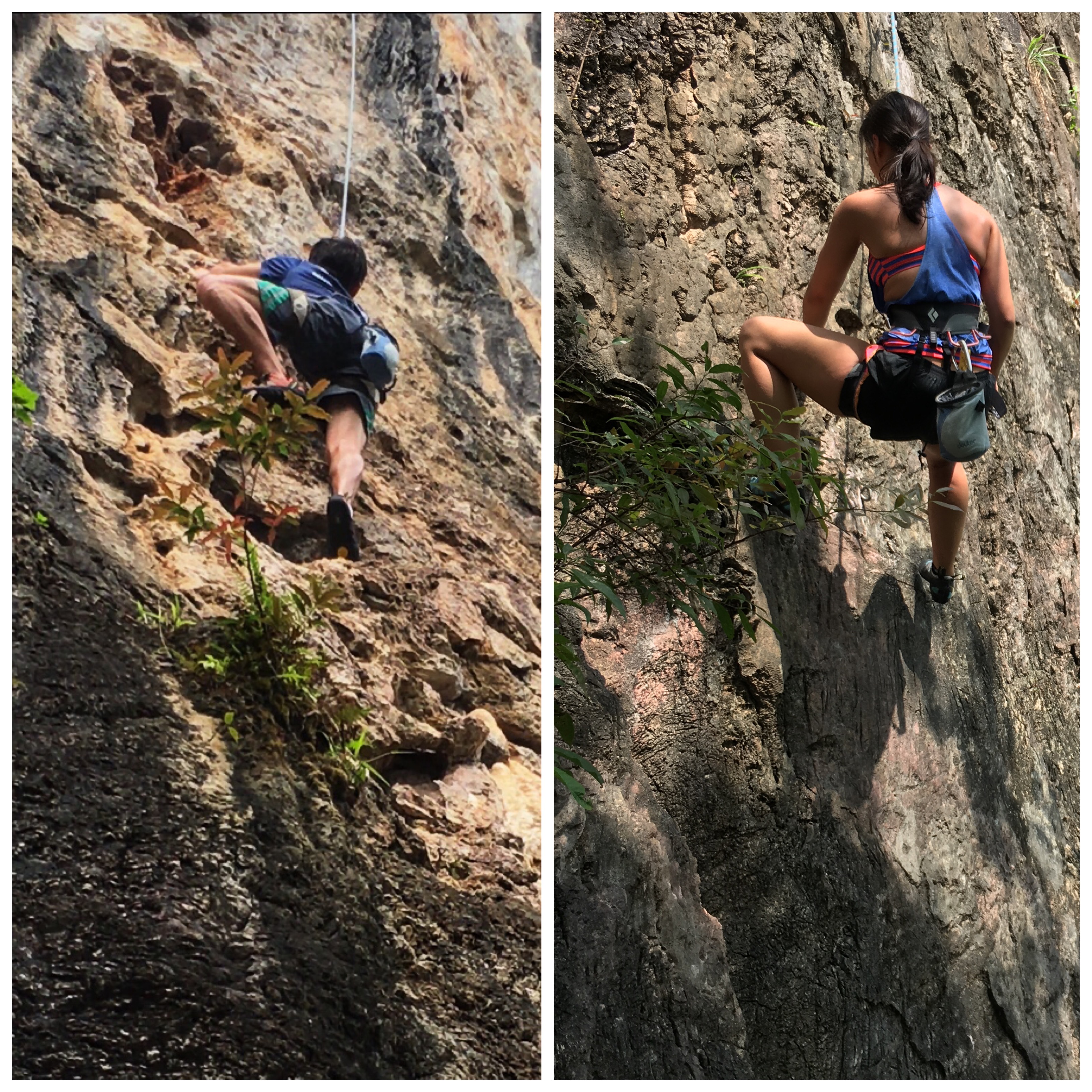
Outdoor top roping was something I’ve always wanted to do, so when my friend pitched the idea, I answered with an emphatic yes. I now appreciate the bravery of both lead climbers and my friend Leandra, who who trusted me to belay her.

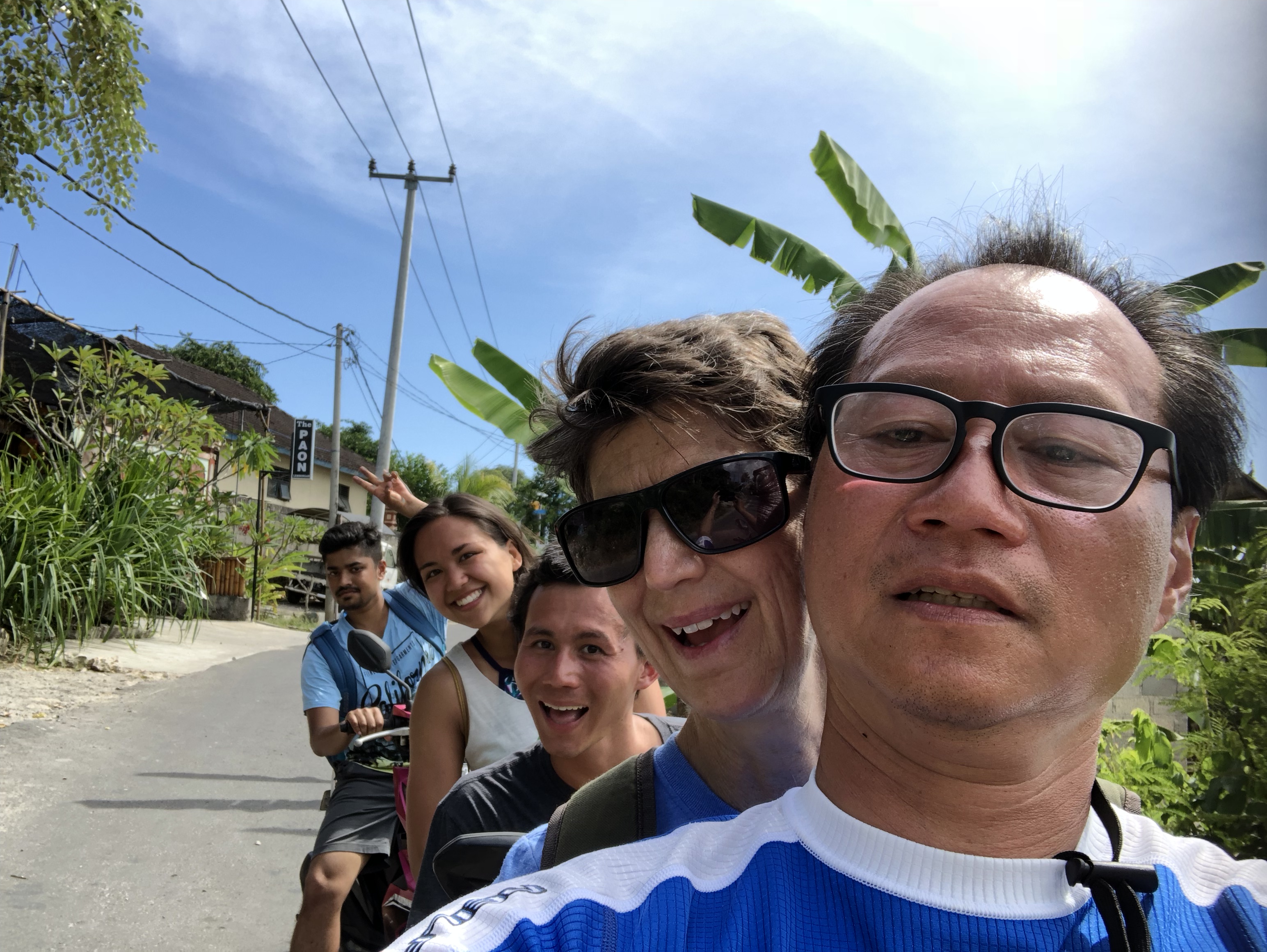
People who can sing mash up songs. I can’t sing so I mash up friend groups. In Bali, scooters are super cheap to rent and somewhere between fun and terrifying to ride so, naturally, that’s what we did.

IMG_1748
Kishore (left) is a friend I made in China, Leandra (second to left) is a friend I made at my last internship who trusted me to belay her rock climbing, and the other two on the right are a middle aged couple I’ve known since like, I was born.

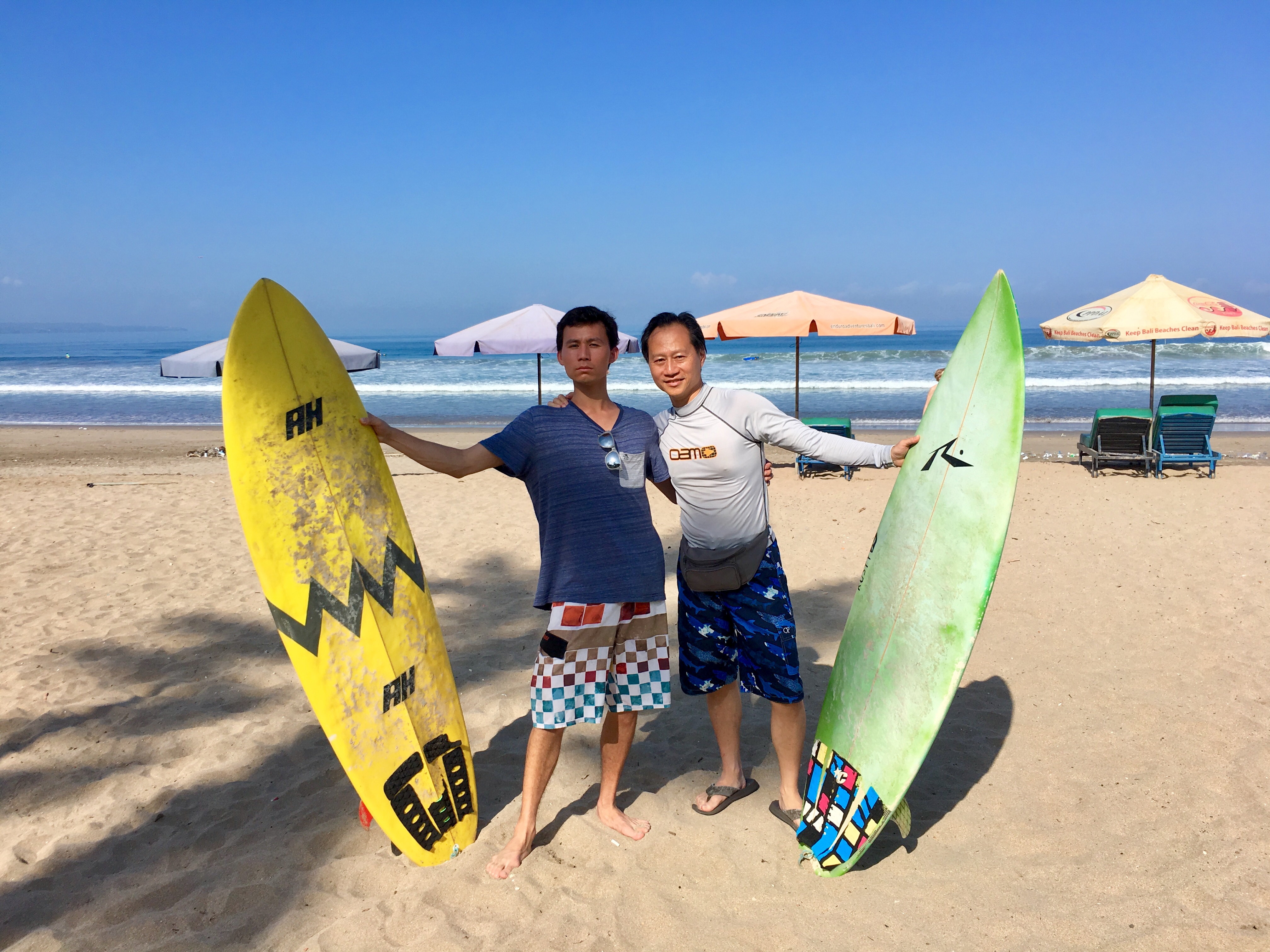
Since rumor has it that one day I’ll look a whole lot like the husband from the couple (far right), let me mention that this photo doesn’t do him justice – he’s still working on the selfie face. Here’s a proper picture of us before we set out surfing.

IMG_1621
Well, proper might be a stretch.

More pictures and stories to come, but for now, enjoy a glamour shot of this pigeon I went through great lengths to herd into the crystal clear pigeon-infinity-pool overlooking Barcelona’s finest view of the Mediterranean.

IMG_1929

English // Chinese

My Chinese has been improving, but it’s still got a ways to go. I’ve focused more on the oral language than the written, so my knowledge of characters is limited. I *usually* receive what I try to order in restaurants, but it isn’t always pretty. The picture-menu is my hero, but even when faced with a wall of foreign text, I’m often in luck. Waiters are usually quite willing to read out a few dishes for me and answer the important questions (“Does this or does this not have shrimp?”).

On the streets and in shops, though, I don’t have the luxury of these friendly waiters. Accordingly, I am ALWAYS appreciative when English translations are provided, regardless of their imperfections. However, that doesn’t mean I don’t chuckle with amusement at some of them.

#EnglishInChina

IMG_9420
… And on top of that, when those darn dryers took office they washed away my unemployment benefits too!

IMG_0418
So of course, we gave it a try. It about lived up to its name.

IMG_0422
There are so many ways I could read this but all are quite unsatisfactory.

IMG_0125
Okay, this one was in Japan, but still, for some odd reason I don’t trust them.

IMG_0508
It makes me happy to imagine myself carefully sliding, keeping a close eye on the steps. Then cautiously trying not to hurt any of the eight people laying side to side to form the platform I’m standing on.

IMG_9065
I guess the ancient emperors ordered these by the thousand?

IMG_0980
So close guys, so close!

In the spirit of good-natured amusement at the difficulty of foreign languages, I thought it would only be fair to note my difficulties with Chinese as well.

#ForeignerInChina

Learning Mandarin is fun. However, learning Mandarin is also dangerous. You’ve probably heard me rant about tones (the vocal inflection with which you say syllables in Mandarin). What English speakers would consider the same word can mean vastly different things in Mandarin. As a foreigner who’s not exactly an expert at pitch (have you heard me sing?), this is a bit troublesome.

Oh, says the barista at Starbucks, you’d like a large STD without sugar, would you? Mmhhmm, says the pandas’ caretaker, you think those chest hairs are very cute? I have to pause and think before I say oatmeal.

Here’s an excerpt from my collection of unfortunately similar phrases.

(For non-Mandarin speakers: I’ve written the Mandarin words below as each syllable followed by its tone, represented by a number. 1 means the preceding syllable should be said with flat pitch; 2 means it should be said with rising pitch, 3 indicates a falling then rising pitch, and 4 indicates a falling pitch. And in case you were curious, the “x” is pronounced like the English “sh”.)

Xing1bing1: Frappuccino
Xing4bing4: STD

Xiong2mao1: Panda
Xiong1mao2: Chest hair

Fang2huo3: Prevent fire
Fang4huo3: Set on fire

Cha2: Tea
Cha4: Bad

Mai4pian4: Oatmeal
Mai3pian4: Buy a (dirty) movie

Lou2ti1: Stairs
Luo3ti3: Naked

There are more, but I don’t want to dissuade you from learning Chinese! It’s a fun language, made all the better by the countless friends and acquaintances who’ve corrected, encouraged, and made fun of me along the way.

Miss

I miss talking to my sister in Spanish so our parents wouldn’t understand. I miss telling her anything and hearing her infallible recommendations.

I miss arguing with Alec over who had dibs on our name. I miss trying to make Anthony’s girlfriends feel uncomfortable about how comfortable he was with me. I miss the lazy mornings turned afternoon talking with Mom, and the fact that I can still sit on Dad’s lap as he quizzes me with engineering questions.

As thrilling as living in the Eastern Hemisphere is, sometimes I can’t help but think of the people on the other side. I miss Chris’s unabashed goofiness. I miss the way Laureen would say Alexander. I miss Andrea’s disparaging comments about kale and quinoa. I miss agreeing with Connor about the evils of flirting.

And the moments; I miss all of the things we’d do! I miss speeding through the mud-and-water rollercoaster better known as Loxahatchee with Collin. I miss picking out date spots I knew I’d never use with Christine. I miss pretending I liked coffee before I actually liked coffee with the squad on a crap-I-bungled-my-plane-tickets trip to NYC. I miss playing exhausted Egyptian Rat Screw with tenacious Leandra.

I miss swimming through every pool on our street with Eric and Jenna, Neddy style; I miss shivering in the cold while Drake cut my hair; I miss Alvin’s entourage of insect glamor shots; I miss driving around roundabouts ad nauseum with Ty.

I guess, what I mean to say, is I miss you.

Question

I could be talking to a friend, a relative, or a stranger. I envision dramatic conversations, canvassing the foibles of utilitarianism and the merits of Arminianism; discussing Fermi problems and dissecting ecumenical rationalism. But alas, in reality, conversation tends more toward the concrete. We chat about what we’re doing in life, where we live, and what the culture is like there. And really, that’s a pretty close second to the dialogues conjured by my fanciful imagination.

So when I say that I’m living in China, I get the question: What’s it like there? Is it the same as it is back home, or is it wildly different?

I pause for a moment, confounded by my limitless options. I look up and think: You likely aren’t in the mood for an exhaustive list, replete with photos and equations (yes, I have those). But you’d probably like more than the half-sentence summary. Should I tell you it’s the same, or should I tell you it’s different? Because it’s both. Should I share the highs or should I share the lows? So I give my Magic 8-ball a good shake, and pick what I think will best entertain my hapless listener.

Fortunately, you, dear reader, are not a captive audience. I’ll never know if you hit the back button. But if you’re still around, enjoy the medium-length version as it resides in my memory: as a series of vignettes.

Welcome to China. Welcome to a land where folks reach far out of their way to help you, even if English is a real struggle for them. A land where people are genuinely curious about what it’s like where you’re from and more than happy to let you practice your Chinese with them, but more often than not end up practicing their English with you. A land where shiny Bentleys glide by sweating street vendors, a land where you dump tea over your utensils to clean them, where it’s easy to make friends with strangers, where it’s normal for your electronics to shock you, where without hesitation, friends welcome you into their home for two weeks, and where crowds form oceans of faces, expressionless features lit by the eerie blue glow of the digital world.

Bike rental: $0.00 (killer promo)

Steamed pork bun (baozi): $0.25

To-your-door delivery: $0.50

10 gigs of 4G data: $3

Starbucks drink: $6

Talk about overpriced coffee. Value is strange here in Shenzhen. Property speculation has driven real estate prices sky high – we’re talking well over $1500 / square foot for these no-frills high rises – but rent is still relatively inexpensive. The opulent and the opportunity-less rub shoulders, and it shows: You can pay as little or as much as you want for a meal.

This is great on the wallet, but less so for planet earth. With delivery prices like those, everyone under thirty orders most of their meals online. To Shenzhen’s credit, they’ve banned motorcycles so these countless deliverymen swarm the streets on electric bikes, but the food comes with so much packaging I fill a dustbin every meal. When dining in, it’s customary to sanitize your utensils and dishes before eating on them with boiling water. But instead of just boiling water, they give you a pot of tea – so after dribbling it down your chopsticks you can drink the rest of the pot. You’ll catch them using the words “water” and “tea” interchangeably. And then, they bring out these dishes served on a bed of peppers or bean sprouts. You’re not actually supposed to eat that – it’s there mostly for flavor or maybe presentation – but for some of these dishes, it feels more is meant to be thrown away than eaten!

That aside, I’ve really enjoyed the food here. I’ve tried some spicier things and oddities like fish eye, chicken stomach, sheep lungs and the like. One of the wilder foods that I tried, though, was snake. My trusty roommate Max took me to an upscale snake restaurant. It was surprisingly quite enjoyable, once I navigated my way around the phalanx of bones bristling through every piece. I imagine the meat-to-bone ratio is better in the big snakes, but those snakes are a bit pricier.

If you think the Western world is leading the payments industry with trendy new things like Apple Pay, think again. In China, everyone from the poshest hotel to the vendor selling bananas on the side of a mountain accepts WeChat pay. You open the app, point the camera at a QR code, and just like that you’ve paid. As long as you’re not bothered by the Chinese government tracking your every purchase, then there’s no reason to carry cash unless you actually enjoy the feel of a walletful of coins jutting into your pelvis.

There’s a lot that doesn’t faze the Chinese. You have to boil the water before drinking it, and since the specific heat of water is unfortunately high (for my non-nerds: this means water takes a long time to cool) everyone here is stuck drinking lukewarm water half the time. But it doesn’t bother them. Online, most locals don’t use their real name or picture for WeChat (their messaging/calling/payments app), but this isn’t an issue for them. There’s a suspicious, ~ 50 hertz buzzing you feel when you touch your electronics, but it’s “normal.” Drivers and cyclists are aggressive, but don’t seemed perturbed when they have to dodge through oncoming traffic to avoid taxis parked in the middle of the road. Not everyone is like that – I had one driver who made it his duty to honk at every slow vehicle he passed – but it’s nice to see people just work around obstacles instead of grumbling about them.

I give my roommates credit for teaching me the majority of my Chinese, but it works both ways: I teach them English too. A day or two after meeting Yanhui, he told me that he didn’t have an English name yet and needed help deciding. Plenty of people pick their foreign names to sound like their original name, but that’s becoming less popular these days. Plus, I wasn’t about to name this poor guy Yankee. So after going through a variety of different names, we settled on Alvin. A friendly name. The next time I’m picking a name again I’ll probably have a pregnant wife (gasp).

In other words, I wouldn’t trade it for anything. Yeah, it’s hard sometimes. There are days when the streets could be streets from any city, just littered with rude cyclists and stinky tofu vendors. But I dwell on the days when instead I see a thriving community full of sixty year old women dancing together in the streets and men practicing tai chi. After all, who knows when I’ll get to live in China again.

Excerpts from Grad School: Chapter 1

If you’re reading this, you probably saw the link I posted and took the trouble to click on it. Which probably means you’ve taken the trouble to read a few of my other Woooh-I’m-In-China! posts, or maybe I’ve already given you the lowdown. But no matter: In case you haven’t, here goes.

I am in China! (Actually, flying over international waters now, but we’ll get there). I’ve been blessed enough to get to travel a good bit with my parents and work, but aside from a month stint living out of a hotel room in Vancouver, the longest I’d been in another country was less than two weeks. While this sort of travel is an awesome way to see the world, it’s a whole lot less effective way of knowing the world. I’d talked to people on most of the continents, but that’s nothing like living with them. And so the dream was born: I wanted to study or work in another country. I decided that’s what grad school would be for: Two semesters in China, officially studying electrical engineering and unofficially studying Mandarin.

I have too many stories to write about all at once, so for now I’ll start with random excerpts of my last ~3 months.

IMG_9045
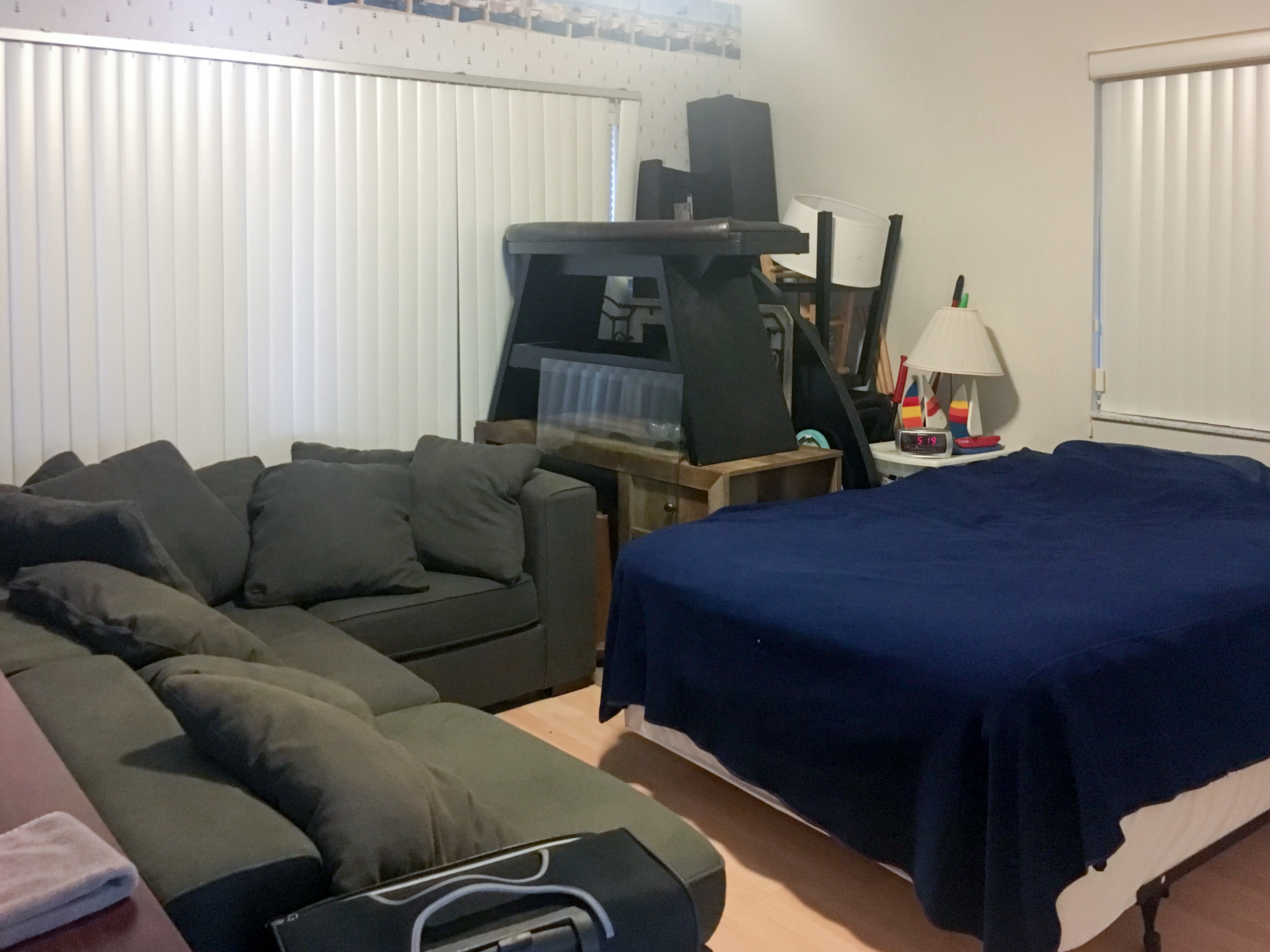
August 16, 2017: Tomorrow’s the big day! Storage units are overpriced and my parents are good to me, so I turned my bedroom at their place into a living room too. It’s sort of like a studio apartment. Trendy, right? They could totally Airbnb it out.

IMG_9046
August 17, 2017: Quick, Jenna, I’d like to come back alive, can you teach me how to tell them that I’m allergic? (Spoiler alert: I’m not dead yet.)
Also, fun fact: I’m writing this on the plane, and the Chinese woman in the seat next to me can’t read what I’m writing, but she looked over and read this and said something to me in Chinese. And I think she affirmed my well-rehearsed apology about my bad Chinese with a friendly yes, your Chinese is very bad. But alas, my Chinese is bad, so I don’t know for sure.

IMG_5360
Wow. Look at the view from my (first) apartment. My roommates are great – more about them later – and rent is way cheaper than America.

IMG_9069
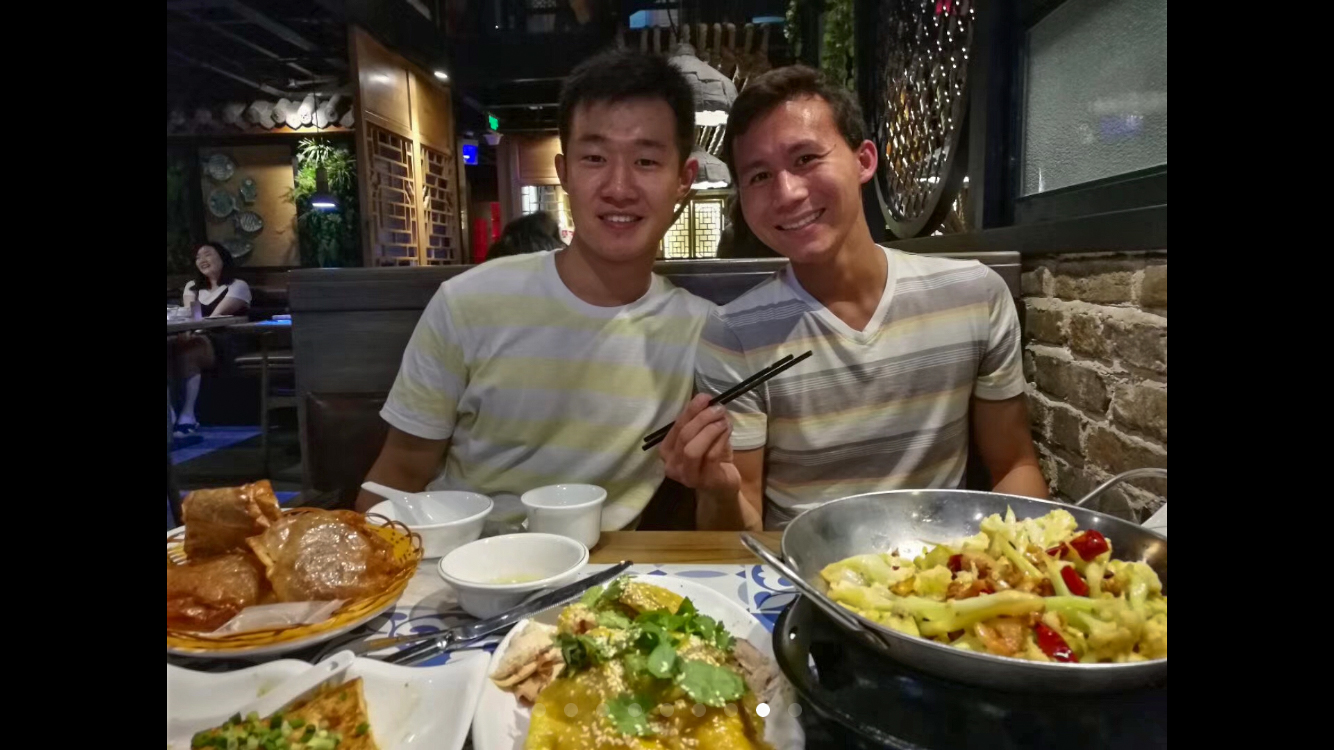
Roommate picture 1! First dinner in China on Yan Hui’s birthday. He’s is one of the nicest, most considerate people I’ve met. I got to help him pick his English name: Alvin.

IMG_9149 copy.jpg
Roommate picture 2: Max teaching me all of the Chinese words I shouldn’t accidentally say. Chinese is a tonal language, which means unlike English, sounds we would call the same word that differ only by pitch, or tone, can mean totally different things. It’s hard. You’ll make funny mistakes. Whatever you do, don’t mix up your tones when asking for strawberries.

Max and Alvin are Chinese Chinese – they learned English as a second language in school. I’m duly impressed at their ability to not only take highly technical engineering classes in English but also crack hilarious jokes in English too. I can only imagine how funny Max is in Chinese. It makes me realize that us lucky/spoiled Americans rarely even consider the possibility of having to take classes or do business in anything but our native language, while a multilingual world is completely the norm in other places.

IMG_9397
Shenzhen is so close to Hong Kong it would be a tragedy if I didn’t make it out there at least once to visit relatives there (they were INSANELY hospitable) and hike some trails. Above: the view from my first such trip, featuring a vivacious Chinese stranger-made-travel companion (closest), a very helpful local (center), and my roommate Shipra (not pictured) who obligingly  put up with all of the mountain climbing I forced her into.

IMG_9445
Classes are tiny. Like, 3-6 students tiny. That meant that I could actually get to know my professors outside of class. This is the entirety of my management class, including our professor (my right, your left). I love the personal-ness: You learn a lot, talking to professors outside of class.

SONY DSC
Alright, I can’t end on a sappy note: I risked life and limb putting my trust in the internet and went looking for some waves, armed only with my bad Chinese and a cell phone. OK, fine, I had internet and maps and China is super safe (more to say on that in another post), so “risked life and limb” is a stretch, but it did cross my mind that I may not be able to find my way back. So there I am, prominently featuring my butt (or lack thereof). Shoulda taken the left. Leave it to the Florida kid to find a beach on the other side of the world.